

Our family history with cattle
My great grandmother started our family tradition of farming and ranching when she homesteaded north of Wildrose in 1905. While she would eventually marry and give the farm management over to her husband and sons, the cattle were always her responsibility and the professional love of her life. The cows provided financial diversity, sustenance during tough times and a daily companionship and purpose until she died.
That love of cattle has continued through the generations. My grandparents raised cattle, and my father and uncle started a registered Black Angus herd in 1973. My sisters and I took for granted that every kid gets to snuggle up with newborn calves, slide down round bale stacks for sledding practice, cowboy up at the feed trough for a bit of a bull ride and instigate a well-intentioned stampede around the winter corral. (Some of these activities got us in a spot of trouble from the parents).
My summer job as a girl was to detect and monitor every cow that was ovulating in the pasture so my uncle could artificially inseminate several cows each morning and evening the month of June until the entire herd was bred. I spent sunup until sundown hiking the windswept prairie and observing our cows and heifers. Jotting down cow and calf behavior notes helped to pass the time; as did keeping track of who would let me give a friendly scratch by month's end. (And there was an occasional nap in the warm grass). It was a pretty sweet job.
Years later when Kevin and I had the opportunity to become daily stewards of Glasoe Angus, those childhood memories beckoned.
I am so grateful we returned. My love of cattle is more steadfast than the day we moved back. I understand what my dad meant when he used to say it was like Christmas every time a sire catalog arrived in the mail. It's truly exciting to consider the genetic options, pedigrees and reproductive potential that could produce the next calf crop. From production performance to maternal ability to carcass superiority, it's a great time to be in the business of promoting and selling Black Angus cattle.
Ultimately, like my great grandmother, I have realized it's the cows that matter most. The challenge of choosing the right pedigree and genetic combination, feeding and fostering the potential of each female and then witnessing her raise her first weaned calf and the next and the next is an incredible privilege and responsibility. She's the reason we stay in business and why we're so fortunate to do what we do. When I'm walking in the summer pasture and gazing at the cows as they mother the next generation of calves, it still seems like a pretty sweet job and the one I hope to have for the rest of my life.
~ Sydney Glasoe Caraballo ~


OUR STRATEGIES

DURABILITY
Hoof to udder, hip to head, base to top line, we constantly assess and judge phenotype for structural correctness that will last on the northern prairie. We don't trim hooves, and we demand superior udder attachment and teat size. If a dam exhibits good mothering ability but has some structural question marks, she goes into our recipient dam program and is utilized to conceive and raise an ET calf. We demand steadfast fertility and longevity from our dams. We don't just market that concept, our dams prove their structural worth over time. Our Glasoe Angus donors are typically ten years old or more before they enter donor service; many are Pathfinders that have naturally raised a decade's worth of consecutive calves before we select them. Functional Longevity isn't just an EPD in our herd; it's proven on the prairie here year after year. We aren't chasing fast and furious numbers on paper scores while only utilizing a yearling sire and heifers to push EPDs higher. We choose lineage and genetics that will hold up from paper to pasture where it truly matters.
And it starts at birth. Reproductive structural strength and mothering ability is certainly paramount with udder quality and milk production, but pelvis shape, dilation and calving ease of head shape, neck extension and knuckles also impact laboring vigor, recovery, bonding with baby and that calf's vigor while it attempts to rise and suckle. The dams -- from our heifers to our long-term matriarchs -- remain in our herd only if they demonstrate zero-maintenance deliveries and excellent mothering instincts from the moment that calf arrives.
Our sires must stand on a solid base and athletic frame built to do an effective job breeding one year after the next. We test our Glasoe Angus sires against nationally ranked studs, and their progeny sell as breedstock -- as bulls and bred females -- at our production sales. We typically sell those sires as coming three-year-olds in our sales as well, but two of our standouts 2016 G A Regard 633 and 2021 G A Certainty 155 have been utilized for multiple years in natural service. Regard is a 2016 model who bred dams in pasture as a coming nine-year-old.

DOCILITY
We prioritize docility in our cattle for ease of handling and safety; this personality trait also increases desired maternal character and herd profitability, as well as pound potential and carcass quality in a feedlot scenario. Many studies prove docile cattle in feedlot environments gain more pounds and produce better carcass values than cattle who are stressed by close quarters and human contact. Disposition for us is an indicator of intellect and discernment; our cattle's ability to discern and separate perceived threats and predators from the hand that feeds them is of benefit to the herd and us.
A smart cow knows the difference between a natural predator on the prairie and us.
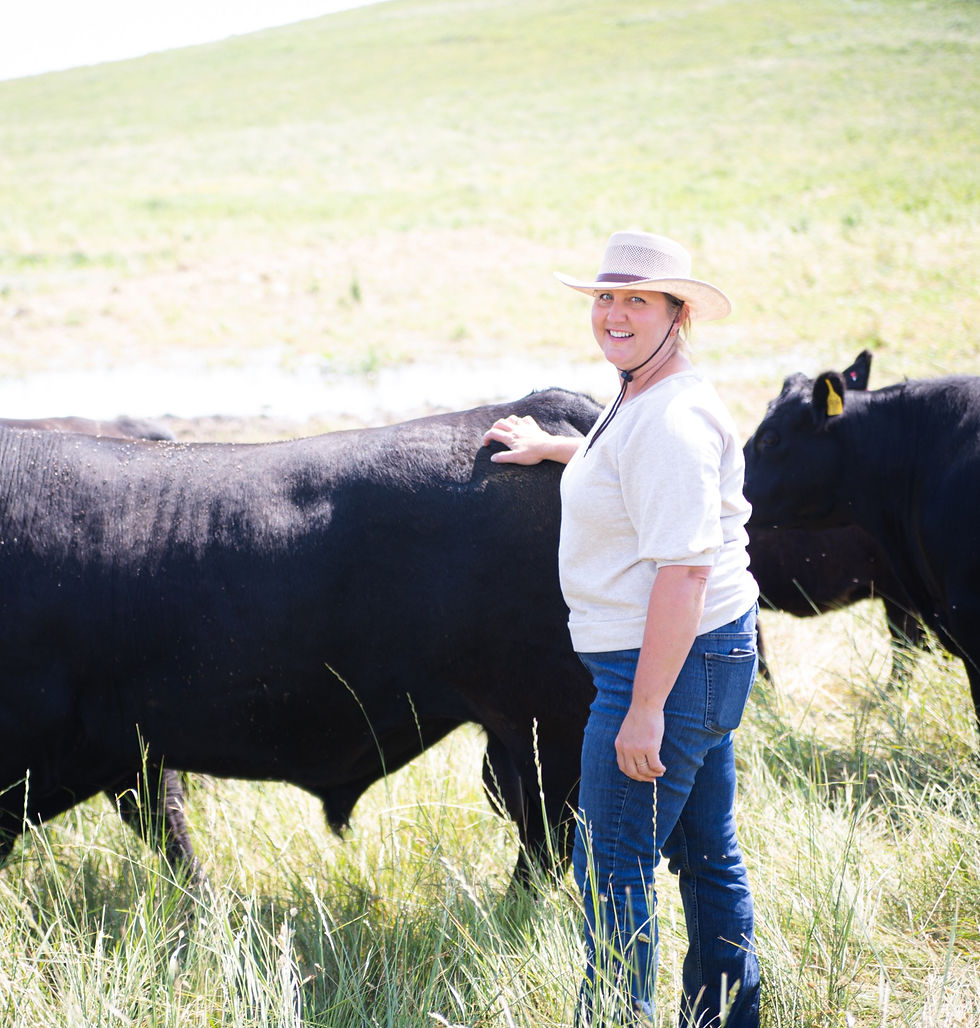
Because our kids and we work up close and personal every day with our herd, we want the ease and safety of handling gentle, quiet cattle. We handle our cattle so they are comfortable with yet respectful of human interaction whether they are in their summer pasture, winter corrals or calving area. Our reference sires in our artificial insemination and embryo program must have a docility EPD that is nationally competitive to be considered by us. We demand the same docility with our natural service sires. We select internal genetics with generations of heritable dispositions in our Glasoe pedigrees, as well as an intimate knowledge of that sire's personality and behavior toward us, the changing environment and handling he experiences from birth to maturity. Our dams, regardless of a paper score, must be tolerant of us when they deliver newborn calves. We believe the behavior and responses they exhibit toward us are models from which their calves witness and learn. By spending time with our herd each day and walking among our cattle and striving to make working them as positive of an experience as possible, our cow/calf pairs are familiar, comfortable and respectful of human interaction. Docility has always been a highly desired trait for us and is mattering more and more to our customers.Ultimately, tolerant and gentle dams increase our safety and profitability and are simply a joy to have on the ranch.
DOMINANCE
Ultimately, we want to raise an animal that increases profitability in our herd and yours.When our customers buy a bull from us, they trust that the calves he sires will perform on the scale come fall. That is a weighty responsibility we don't take lightly. It's critical to know how our calves will perform from birth to weaning in an honest environment. When we moved back to the ranch, we made a promise that our calves would subsist purely on pasture grass and their mother's milk until their 205-day weights. While the weather, water supply and pasture conditions change every year, we are seeing the benefits of this philosophy. We are determining which progeny and cow families thrive amongst typical conditions here and determine our dam retention accordingly. For example, in 2017 we experienced severe drought while our cows produced the heaviest 205-day weight averages in our herd history. More than 15 percent of our bulls weighed 800 pounds or more, and 70 percent were 700 pounds or higher. In 2019 with better pasture conditions and fall rains, nearly 25 percent of our bulls weighted more than 800 pounds at 205 days (the breed average was 655 pounds in 2019). We have raised several bulls in the past few years that broke the 900-pound barrier without exposure to creep. Every year we register every calf we raise and submit all performance to the American Angus Association. We continue to select AI and natural sires with proven pedigrees to back weaning production, carcass value and maternal traits they pass on to progeny. Ultimately, our cows matter most. Each dam's EPD score tells only part of the story. Every year we have culled a quarter of our cow herd and replenished it with Glasoe born and bred heifers so we can continually track not only individual production performance but also the maternal performance of dam family pedigrees. We want cows that breed back each year within a 365-day window while consistently weaning easy-fleshing and eye-catching calves. We have Pathfinder dams contributing alongside their great, great granddaughters in our herd today.